

Knowledge
Terpenes in cannabis: their role and positive properties
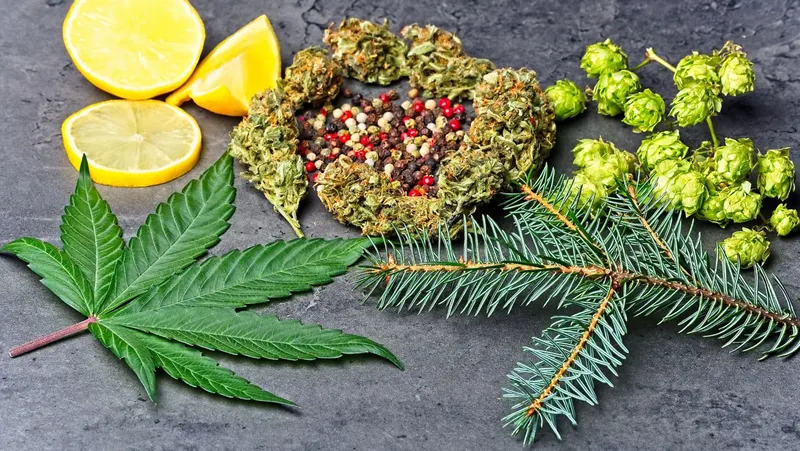
Cannabis is a plant with a long history, used in many cultures around the world for medical, spiritual and recreational purposes. While many people associate cannabis primarily with the psychoactive effects of THC (tetrahydrocannabinol), the plant consists of a wide variety of chemical compounds, all of which play a part in its effects. One particularly interesting group of these compounds is the terpenes.
What are terpenes?
Terpenes are a large and diverse class of organic compounds found in many plants and responsible for their characteristic aromas and flavours. Made up of carbon and hydrogen, these compounds are the main constituents of essential oils and are produced not only by plants but also by some animals. In cannabis, terpenes play a particularly important role, as they influence not only the aroma but also the modulation of the effects of cannabinoids such as THC and CBD.
In nature, terpenes play a variety of roles. They serve plants as a defence mechanism against herbivores and diseases by repelling or attracting insects. They also protect plants from UV radiation and help them adapt to their environment. This blog post looks at the significant role of terpenes in cannabis plants and their positive properties.
Terpenes in cannabis.
Cannabis produces over 100 different terpenes, each with its own unique properties. These terpenes are formed in the trichomes of the cannabis plant, the same glands in which cannabinoids such as THC and CBD are produced.
The combination of terpenes and cannabinoids in a cannabis plant contributes to the “entourage effect”, a concept according to which the various compounds in the plant work together to enhance or modify the overall effect. This means that the effect of a particular cannabis strain depends not only on its THC or CBD content but also on its terpene composition.
The role of terpenes in cannabis.
Terpenes play a crucial role in the cannabis plant that goes beyond simply providing aroma and flavour. They can modulate the psychoactive effects of THC and support the therapeutic benefits of cannabinoids.
Modulating the effects of cannabinoids.
One of the most fascinating features of terpenes is their ability to modulate the effects of cannabinoids. This synergy is often referred to as the “entourage effect”. For example, the terpene myrcene, which occurs in high concentrations in some cannabis strains, has sedative properties and can intensify the psychoactive effect triggered by THC. Limonene, on the other hand, another common terpene, has mood-lifting properties and can intensify the euphoric effects of THC.
Influence on flavour and aroma.
The unmistakable scent of cannabis is the result of a complex blend of terpenes. These compounds can produce the smell and taste of citrus fruits, pine, lavender and many other aromas. These sensory properties are not only important for the user experience but may also offer therapeutic benefits, such as promoting relaxation or reducing stress.
Therapeutic properties.
In addition to their role in influencing the cannabinoid profile of cannabis, terpenes also have therapeutic properties of their own. Many terpenes have anti-inflammatory, analgesic, antimicrobial and antioxidant properties, making them valuable constituents of both cannabis medicine and herbal medicine in general.
Key terpenes in cannabis and their properties.
Some of the most common terpenes in cannabis and their positive properties are described below.
Myrcene
Myrcene is one of the most common terpenes in cannabis and is found in many plants, such as hops, mangoes and thyme. It has an earthy, musky aroma with a hint of cloves.
Positive properties:
– Sedation: myrcene has calming properties that can contribute to relaxation.
– Anti-inflammatory: myrcene can reduce inflammation and thereby relieve pain.
– Pain-relieving: myrcene is also thought to act as a natural painkiller.
Limonene
Limonene is a terpene with a strong citrus scent that occurs in the peel of citrus fruits. After myrcene, it is the second most common terpene in cannabis.
Positive properties:
– Mood-lifting: limonene can reduce stress and anxiety and lift the mood.
– Antimicrobial: it has antimicrobial and antifungal properties that can help fend off pathogens.
– Anti-cancer: studies suggest that limonene could have anti-cancer properties.
Linalool
Linalool is another terpene commonly found in cannabis and is known for its floral scent, similar to lavender.
Positive properties:
– Anxiolytic: linalool has calming properties that can help reduce anxiety.
– Sleep-promoting: it can help with insomnia and improve sleep quality.
– Anti-inflammatory: linalool has anti-inflammatory effects that can reduce pain and swelling.
Caryophyllene
Caryophyllene is a terpene with a spicy, peppery scent that is found in herbs such as black pepper and cloves.
Positive properties:
– Anti-inflammatory: caryophyllene is known for its strong anti-inflammatory properties.
– Pain-relieving: it also acts as an analgesic and can relieve pain.
– Binding to CB2 receptors: caryophyllene can interact directly with the CB2 receptors in the body, which enhances its anti-inflammatory effect.
Pinene
Pinene is the terpene responsible for the characteristic scent of pine and other conifers. It is also found in many cannabis strains.
Positive properties:
– Anti-inflammatory: pinene has anti-inflammatory properties and can help relieve respiratory problems.
– Bronchodilating: it can widen the airways and make breathing easier.
– Concentration-enhancing: pinene can improve cognitive function and concentration.
The entourage effect: terpenes and cannabinoids in symbiosis
The entourage effect describes the phenomenon whereby the various compounds in cannabis work together to produce a stronger effect than any single compound on its own. Terpenes play a key role in this process, as they can enhance or modulate the effects of THC, CBD and other cannabinoids.
One example of the entourage effect is the combination of myrcene and THC. Myrcene can make the blood-brain barrier more permeable, which means THC can reach the brain more quickly and in larger amounts. This can intensify the psychoactive effect of THC and promote deeper relaxation.
Another example is limonene, which in combination with CBD can help reduce anxiety. The mood-lifting properties of limonene can enhance the calming effect of CBD and lead to a more balanced, relaxed experience.
Terpenes in medicine: current research and applications
Terpenes have great potential in medicine, not only as constituents of cannabis but also as therapeutic agents in their own right. Because of their wide range of biological activities, terpenes are being studied intensively in pharmaceutical research.
Pain management
Various terpenes such as myrcene, linalool and caryophyllene have pain-relieving properties that make them potential alternatives or complements to conventional painkillers. These terpenes may be helpful in treating chronic pain, arthritis and other painful conditions.
Anxiety and depression
The anxiolytic and mood-lifting properties of terpenes such as linalool and limonene make them promising candidates for the treatment of anxiety and depression. In future, these terpenes could play a role in the development of new antidepressants and anxiolytics.
Inflammatory diseases
Terpenes such as pinene and caryophyllene have strong anti-inflammatory properties and could be used in the treatment of inflammatory diseases such as arthritis, inflammatory bowel disease and
asthma. Their ability to reduce inflammation without causing the side effects of steroids or NSAIDs (non-steroidal anti-inflammatory drugs) makes them attractive alternatives.
Terpenes and their importance for cannabis breeding
Terpenes are playing an increasingly important role for cannabis breeders and consumers. While cannabinoids such as THC and CBD remain the main focus, more and more people are recognising the importance of terpenes for the overall profile and effect of a cannabis strain.
Breeding goals
Breeders are working to develop strains with specific terpene profiles in order to achieve particular effects or aromas. For example, there are strains with a high limonene content for an energising effect, or strains with a high myrcene content for a calming, relaxing effect.
Consumer preferences
For consumers, particularly medical users, terpenes can play a decisive role in choosing the right strain. A patient suffering from anxiety, for example, might prefer a strain rich in linalool, while someone with chronic pain might choose a strain high in caryophyllene.
Terpenes in other plants: a comparison
Terpenes are found not only in cannabis but also in many other plants used in traditional medicine. A comparison shows that many of the terpenes found in cannabis are also present in herbs and spices such as lavender, rosemary and pepper. These plants have been valued for their healing properties for centuries, which further underlines the potential medical importance of the terpenes in cannabis.
Conclusion: the future of terpenes in cannabis medicine
Research into terpenes in cannabis is still in its infancy, but the results so far are promising. These compounds could be the key to unlocking the full potential of cannabis as medicine. By understanding how terpenes interact with cannabinoids and what therapeutic properties they have, scientists and doctors can develop personalised treatment approaches tailored to the specific needs of patients.
The future of cannabis medicine could lie in the precise determination and manipulation of terpene profiles to achieve targeted therapeutic effects. For consumers, this means a wider choice of cannabis products tailored to their individual needs, whether for pain management, coping with stress or improving general well-being.