

Knowledge
Cannabinoids: THC, CBD and their differences
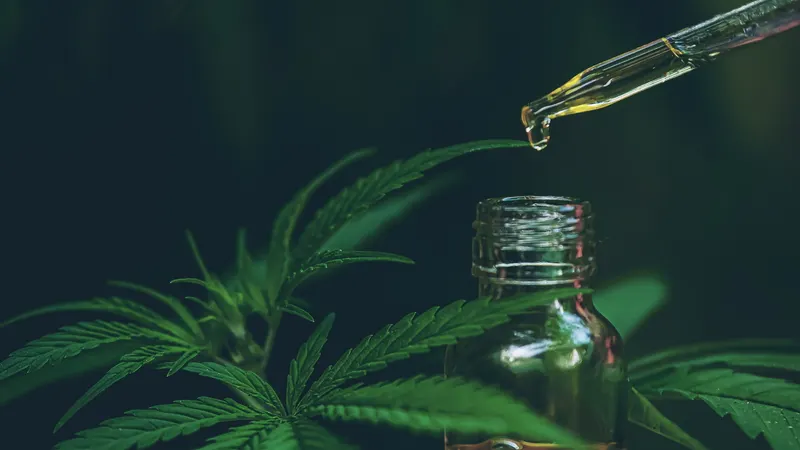
Cannabinoids are chemical compounds found in the cannabis plant that exert a wide range of biological effects on the human body. Two of the best-known cannabinoids, tetrahydrocannabinol (THC) and cannabidiol (CBD), have gained considerable importance in recent years, both in scientific research and in public perception. This article explains in detail the most important cannabinoids, their areas of application and benefits, and the difference between THC and CBD. It also takes a closer look at the lesser-known compounds cannabidiolic acid (CBDA) and tetrahydrocannabinolic acid (THCA), as well as the decarboxylation process and its significance.
What are cannabinoids and how do they work?
Cannabinoids are natural compounds found mainly in the cannabis plant. More than 100 different cannabinoids have been identified to date. These substances interact with the human body’s endocannabinoid system (ECS), a complex network of receptors and enzymes that plays a key role in regulating numerous physiological processes. These include the regulation of pain, sleep, mood and immune system functions. The main receptors of the ECS, CB1 and CB2, are located mainly in the brain and the central nervous system, but also in other parts of the body.
THC: the psychoactive cannabinoid
Tetrahydrocannabinol (THC) is the primary psychoactive cannabinoid in the cannabis plant and is responsible for the euphoric effects typically associated with cannabis use. THC acts mainly by binding to CB1 receptors in the brain, which can affect perception, memory and motor skills. In addition to its psychoactive effects, THC also has a number of medicinal applications and is used to relieve symptoms such as chronic pain, nausea and loss of appetite.
Medicinal applications of THC:
1. Pain relief: THC can reduce chronic pain, particularly in conditions such as arthritis or multiple sclerosis.
2. Appetite stimulation: THC can increase appetite, especially in patients with eating disorders or those undergoing chemotherapy.
3. Relief of nausea: THC is often used to reduce nausea, above all in patients receiving chemotherapy.
CBD: the non-psychoactive cannabinoid
Cannabidiol (CBD) is the second most abundant cannabinoid and is becoming increasingly popular because of its non-psychoactive properties and its therapeutic potential. Unlike THC, CBD does not bind directly to CB1 or CB2 receptors but modulates the endocannabinoid system indirectly, which leads to a variety of positive health effects without causing a “high”.
Benefits of CBD:
1. Anti-inflammatory properties: CBD has strong anti-inflammatory effects that may be useful in treating inflammatory conditions such as arthritis.
2. Relief of anxiety and stress: CBD is frequently used to treat anxiety, depression and stress-related disorders, as it can influence serotonin receptors.
3. Neuroprotective effects: Research suggests that CBD has the potential to slow neurodegenerative diseases such as Alzheimer’s and Parkinson’s.
Comparing THC and CBD: the main differences
Although THC and CBD are structurally similar and both are cannabinoids derived from the cannabis plant, they differ considerably in how they affect the body. THC is psychoactive and produces a “high”, whereas CBD is non-psychoactive and does not cause intoxicating effects. This difference makes CBD an attractive option for people who want to benefit from the medicinal advantages of cannabis without experiencing psychoactive effects.
Another key difference is the legal status of the two substances. In many countries THC is strictly regulated or banned because of its psychoactive properties, whereas CBD, especially when derived from hemp, is often legal as long as the THC content stays below a certain limit.
CBDA and THCA: the precursors of CBD and THC
In the cannabis plant, the cannabinoids THC and CBD are not initially present in their active form but as their acidic precursors, THCA and CBDA. These compounds are abundant in the fresh cannabis plant and are converted into their active form through the process of decarboxylation.
Cannabidiolic acid (CBDA) is the precursor of CBD. In its raw form, CBDA itself has medicinal potential, in particular anti-inflammatory and anticonvulsant properties. Tetrahydrocannabinolic acid (THCA) is the precursor of THC and also shows interesting therapeutic effects, such as anti-inflammatory and neuroprotective properties.
The decarboxylation process: significance and how it works
Decarboxylation is a chemical process in which a carboxyl group (COOH) is split off from a molecule. In relation to cannabinoids, this means the conversion of CBDA into CBD and of THCA into THC. The process is normally triggered by heat, whether through smoking, vaporising or cooking.
Why is decarboxylation important?
1. Activation of the cannabinoids: Without decarboxylation, the cannabinoids remain in their inactive form, which has little or no biological activity. Only once they have been converted into their active form can THC and CBD develop their full effects.
2. Medicinal efficacy: Many of the therapeutic properties of THC and CBD are only released through decarboxylation. This process is therefore crucial for achieving the desired medicinal effects.
Medicinal applications of cannabinoids
The therapeutic use of cannabinoids has increased worldwide in recent years, as more and more scientific studies demonstrate their effectiveness in treating various conditions. THC is used mainly for pain relief, to combat nausea and to stimulate appetite. CBD is increasingly used in the treatment of anxiety disorders, epilepsy, chronic pain and inflammatory conditions.
One interesting aspect is the so-called “entourage effect”, in which the combined use of THC and CBD produces a synergistic effect. According to this theory, the effect of cannabinoids can be enhanced when they are taken together rather than in isolation.
Legal status of cannabinoids
The legal status of cannabinoids varies considerably around the world. In Switzerland, CBD has been legal since 2016 as long as the THC content is below 1%. Products with a higher THC content are generally only authorised for medicinal purposes and are subject to strict controls. As a result of these legal differences, CBD products have become very popular in recent years, while products containing THC are used mainly in medical contexts.
Future developments in cannabinoid research
Despite their long history of medicinal use, research into cannabinoids is still at a relatively early stage. Future studies could lead to the discovery of further cannabinoids and a better understanding of their specific effects on the human body. Lesser-known cannabinoids such as CBDA and THCA could become more important in future, particularly in the development of new therapeutic approaches.
Conclusion
Cannabinoids such as THC and CBD offer a broad range of medicinal applications and benefits. While THC is known above all for its psychoactive effects, CBD has gained considerable importance thanks to its non-psychoactive properties and therapeutic versatility. The acidic precursors CBDA and THCA also have promising medicinal potential, which is activated through the process of decarboxylation. As research progresses, further applications and therapeutic benefits of these fascinating substances are sure to emerge.